I have been thinking about my Obsidian vaults and Ghost website, and how I organize and process the types and relationships for the notes in my personal knowledge management (PKM) system.
See the LYT
My PKM system of linked notes is based what I've learned through multiple Linking Your Thinking (LYT) Workshops with Nick Milo, the LYT team, and community. I have developed my own custom PKM system that focuses on Obsidian notes with integration for multiple applications, tools, and services in my environment.
Share the LYT
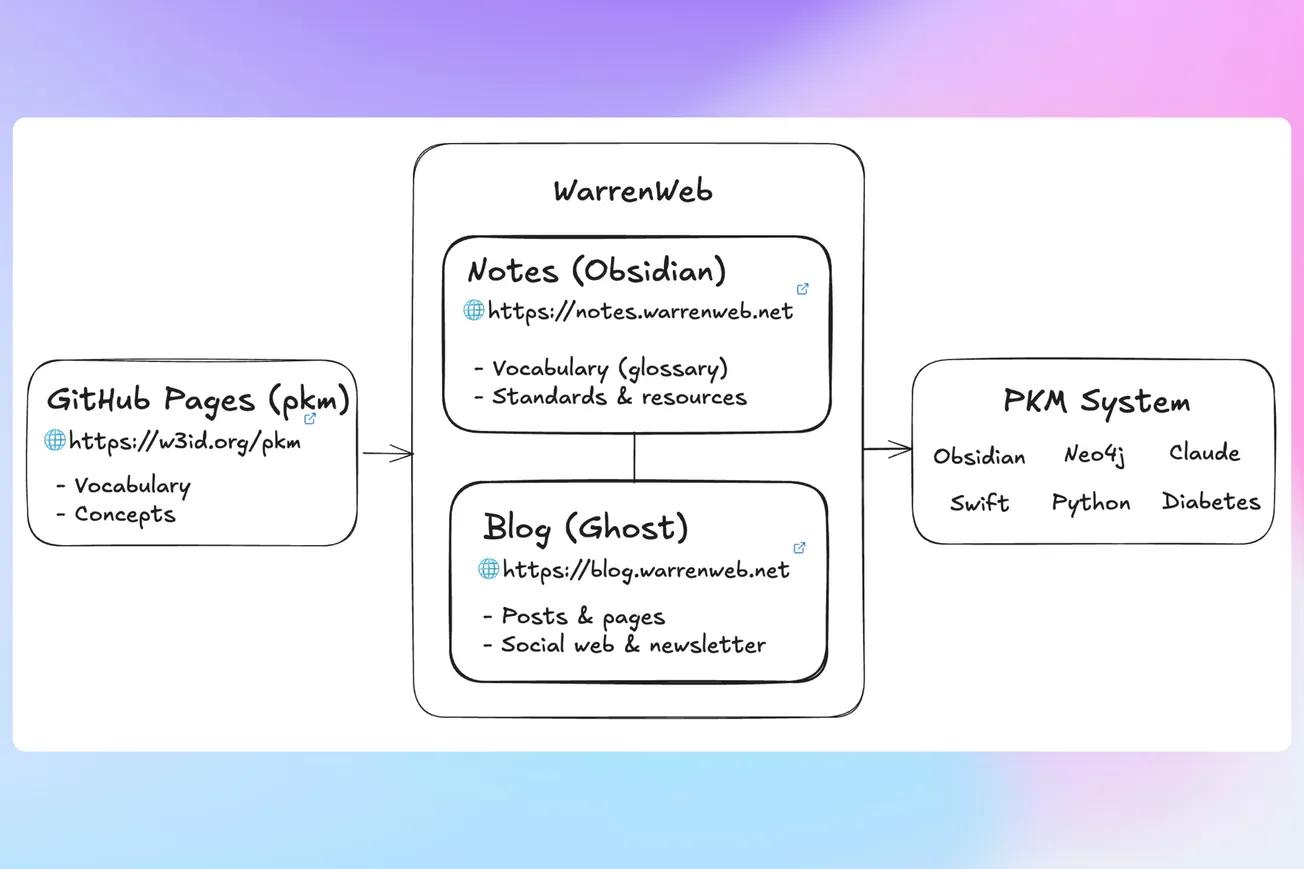
I'm now actively expanding my PKM system to focus on sharing what I'm thinking and linking with outputs from my efforts. Recently, I have introduced a new WarrenWeb Notes digital garden vault via an Obsidian Publish site to complement my new Ghost website, blog, and newsletter.
Notes and Pages
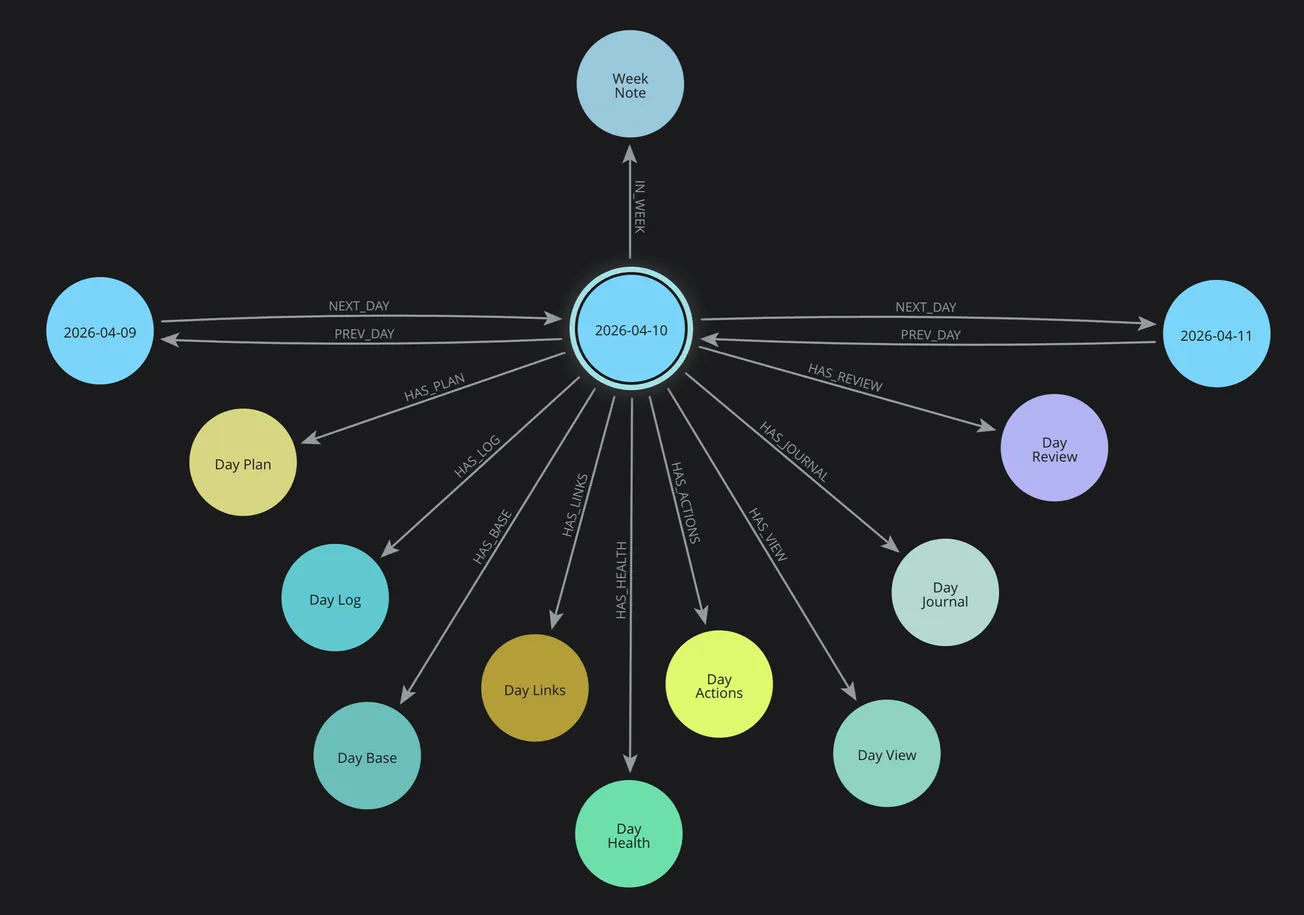
In my Obsidian vaults, I create and link notes and maps, using templates, metadata, and views that help me with organization, ideation, navigation, and packaging.
On my Ghost website, I create and link pages and posts, along with maps and tags that help users with access, connection, navigation, and topical focus; in this case, the maps include menus, sidebars, and hub pages.
LYT Pipeline
My LYT Pipeline workflow processes notes across my Ideaverse private vault and WarrenWeb digital garden, which eventually become pages and posts on my Ghost website.
I find that it's helpful to apply these same principles across multiple apps in my PKM system environment for consistency and streamlined processing.
Now is the time to review all these changes, assess my current system, make any necessary adjustments, and develop additional automation support for my workflows.
Integration
It's important to spend some time with introspection on how I can manage this evolution and streamline my workflow process and periodic practices with automation where possible.
Since I've been migrating to my new Ghost website from the Wordpress site that I started 10 years ago, I have also been exploring what changes I want to make now that I'm integrating it with my PKM system and Obsidian linked notes.
Summary
This Shine a LYT on PKM series focuses on my Obsidian vaults as I refactor and improve my PKM system. I started this effort during LYT Workshop 14, and will share my work in progress with subscribers in my digital garden before publishing on my Ghost website.
So far, I created clusters of pages about vaults, folders, and notes. Subsequent topics are templates, links, maps, metadata, views, and workflows.
- PKM Vaults - Evolution, improvements, and refactoring
- PKM Folders - About ACE organization, PARA, and custom folders
- PKM Notes - Making, developing, organizing, processing, sharing notes
I will learn from this experience, and hope it gives you some ideas that will help you also. As I shine a LYT on my PKM system, perhaps it might act as a LYT beacon and compass with guidance and direction for you.