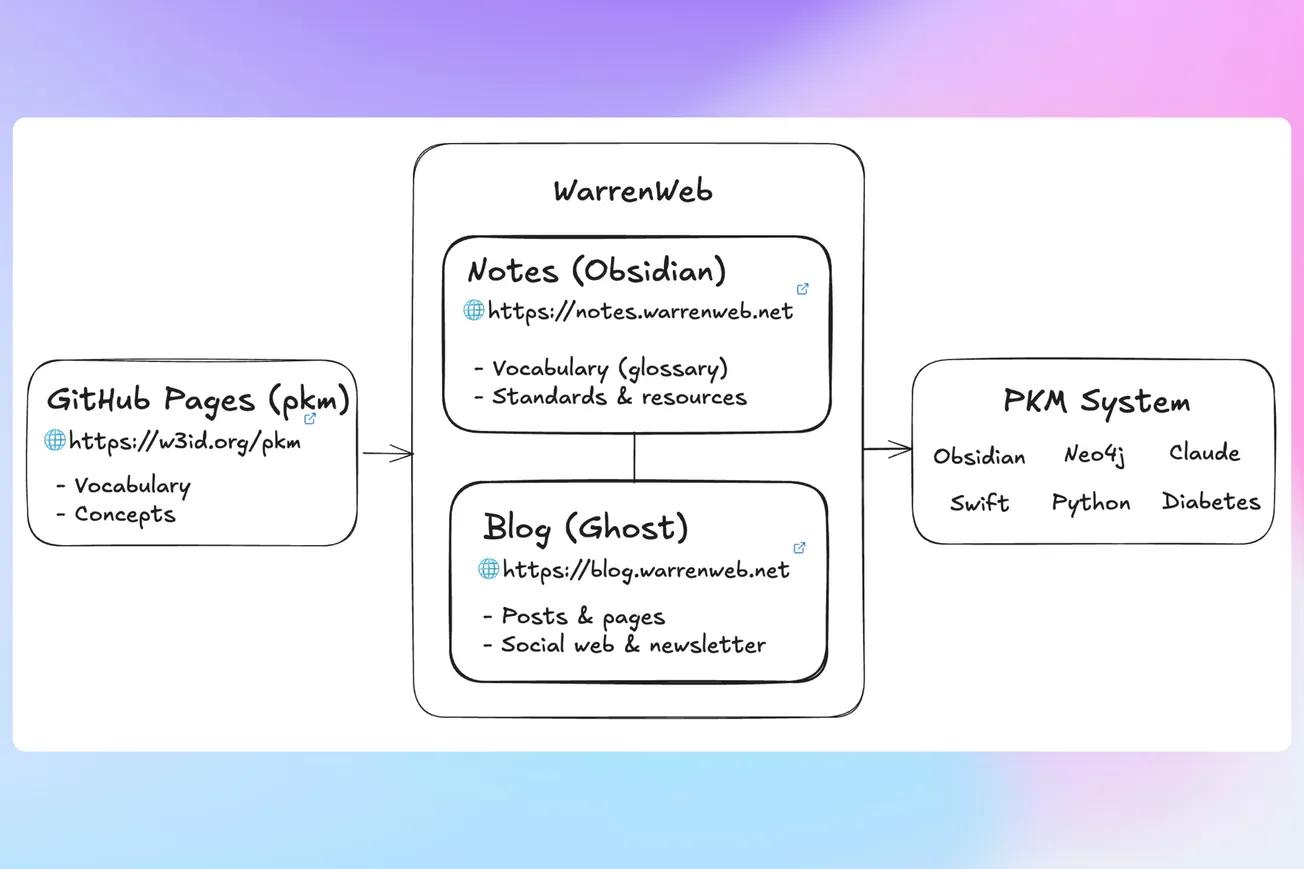
Three Places for One PKM Vocabulary
I wrote down the 223 concept terms my vault and my tools argue about. Then I had to work out which of my three websites each part of it actually belongs on.
I wrote down the 223 concept terms my vault and my tools argue about. Then I had to work out which of my three websites each part of it actually belongs on.
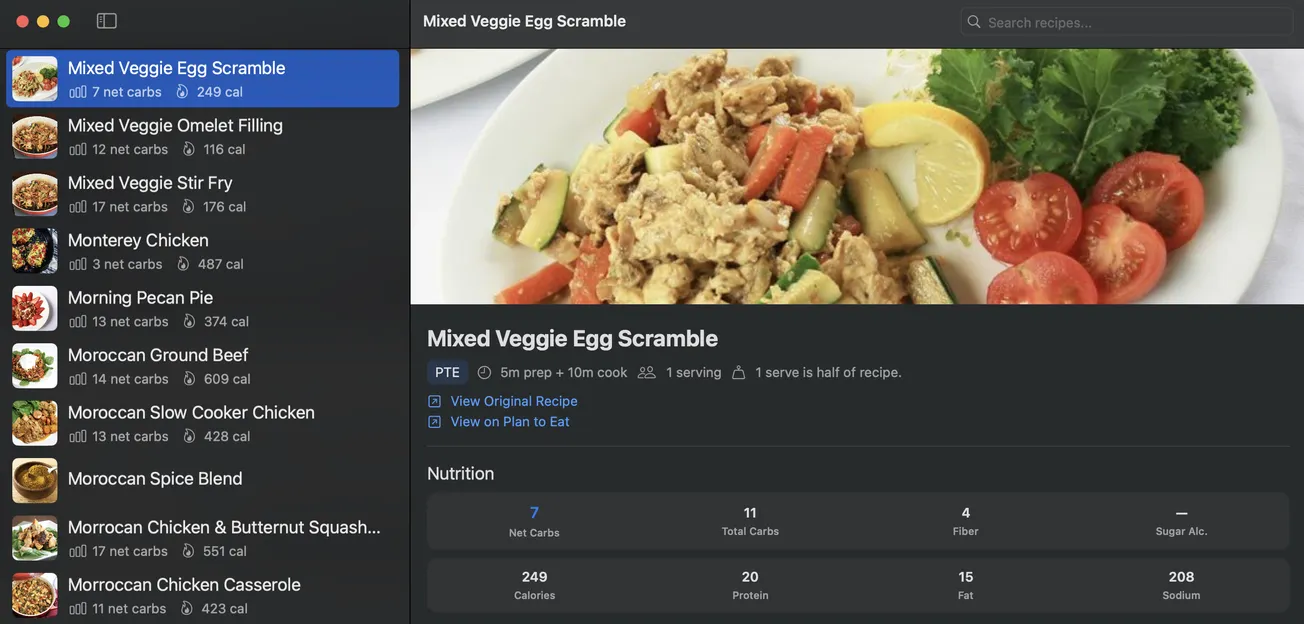
My AI diabetes coach knew my glucose spiked to 204 mg/dL. It just didn't know about the banana bread. Part 6: building a recipe database that connects what I eat to what my glucose does.
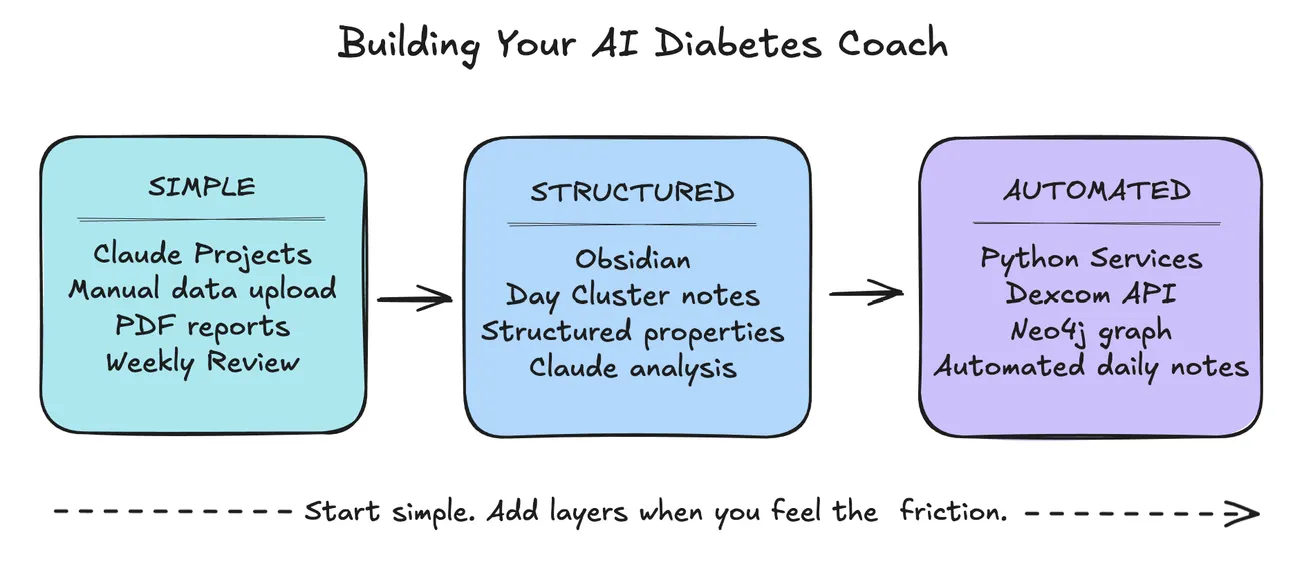
You've read about what's possible. Now it's time to start building. This guide walks through three levels of implementation — from a simple Claude Project to a fully automated system — so you can begin wherever you are today.
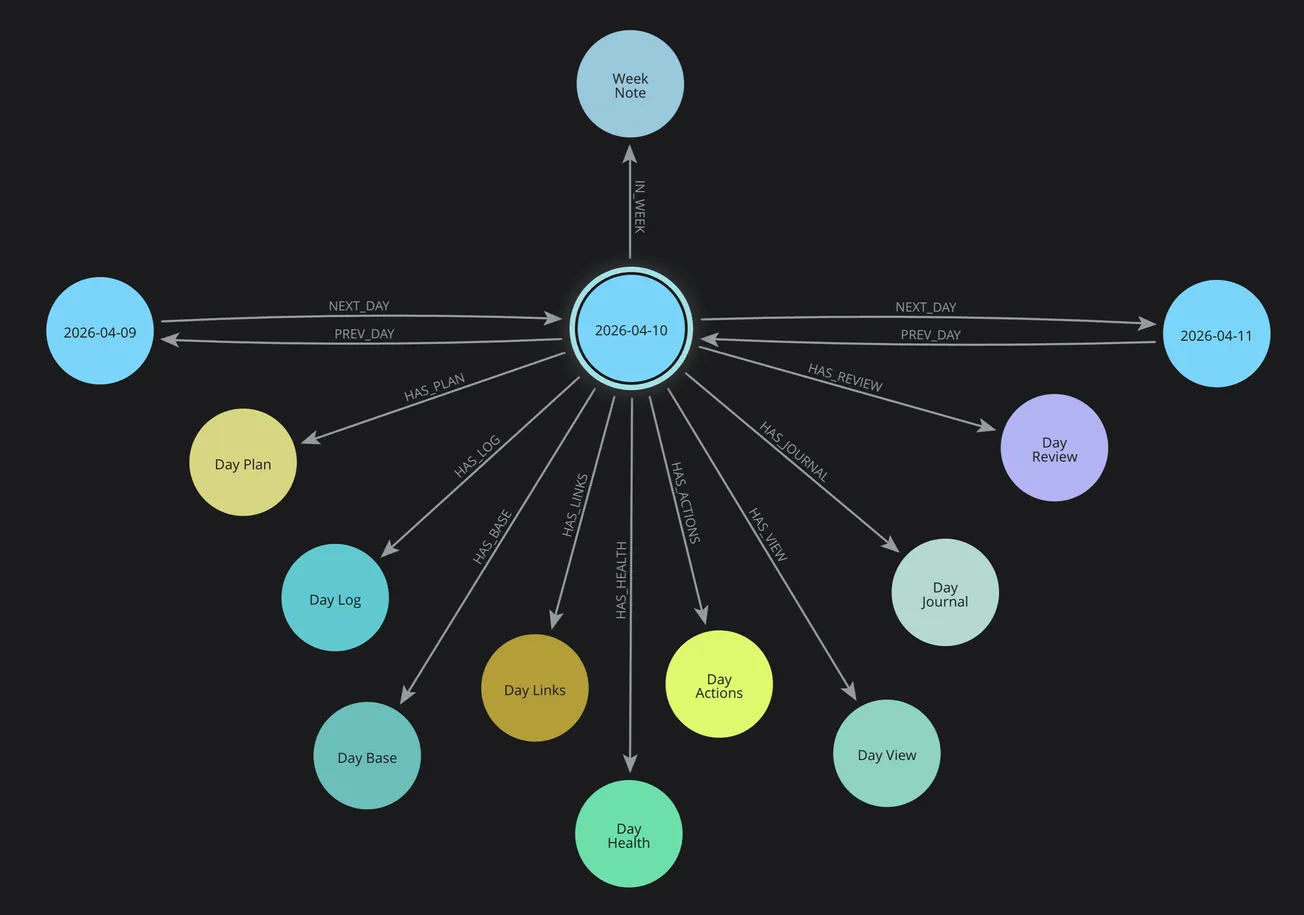
AI could be a genuinely knowledgeable diabetes coach — if only it could remember. Part 4 explores how a knowledge graph gives AI the persistent memory and structured context it needs to become a real health partner, not a brilliant stranger you re-introduce yourself to every time.
How I went from asking 'Why is my glucose high?' to getting personalized daily coaching that improved my time in range from 82% to 98%. Six iterations of prompt engineering that transformed generic AI into an essential health tool.

Most PKM systems use a single daily note. I tried that for years. Everything piled into one file: plans, logs, reflections, glucose data, AI analysis, tasks, links. Finding anything meant scrolling through hundreds of lines...
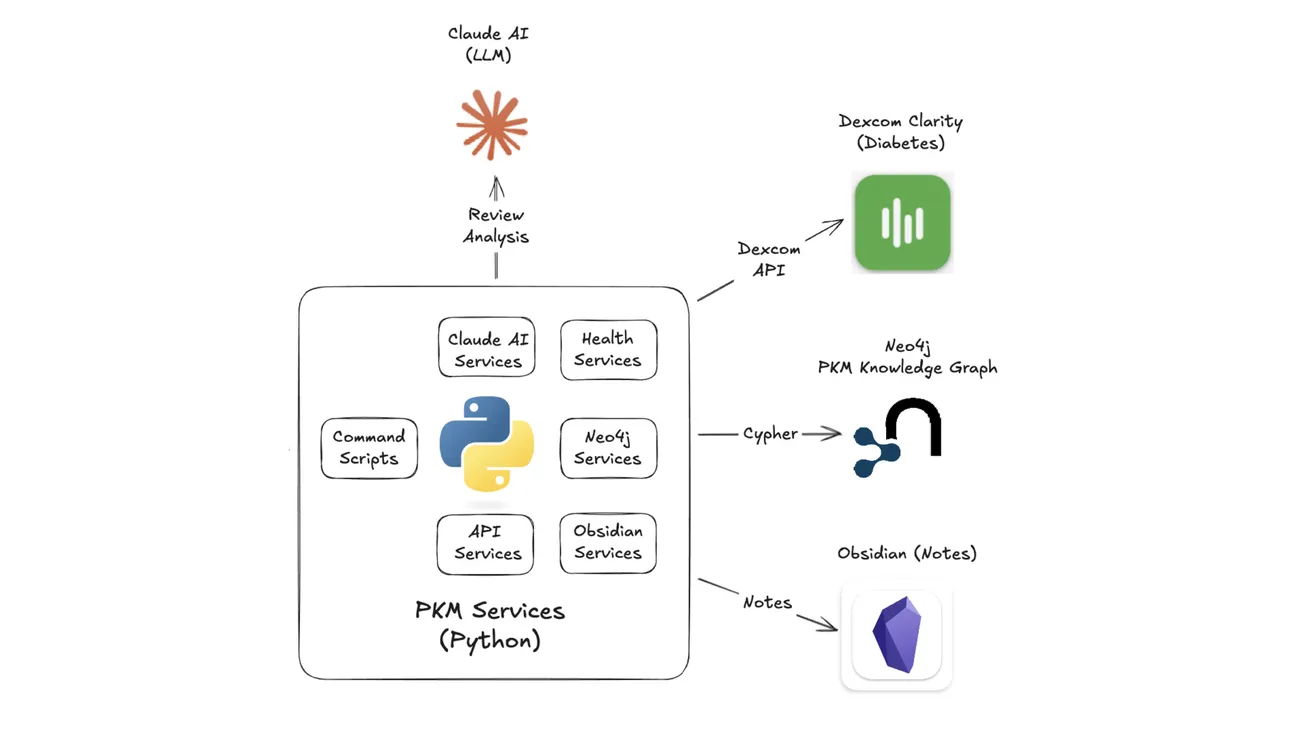
In Part 1, you saw 82% → 98% time in range. But how does it work? This reveals the complete system: 5 components that transform raw sensor data into daily AI coaching. Dexcom API to Neo4j to Claude AI. Real examples, $20/month total. Part 2 of 5.
Six weeks ago, I was averaging 82% time in glucose range. This week? 98% TIR with five perfect 100% days. Here's how I built an AI-powered PKM system that turns diabetes data into daily coaching.

Python services trigger QuickAdd macros to execute Obsidian command workflows.
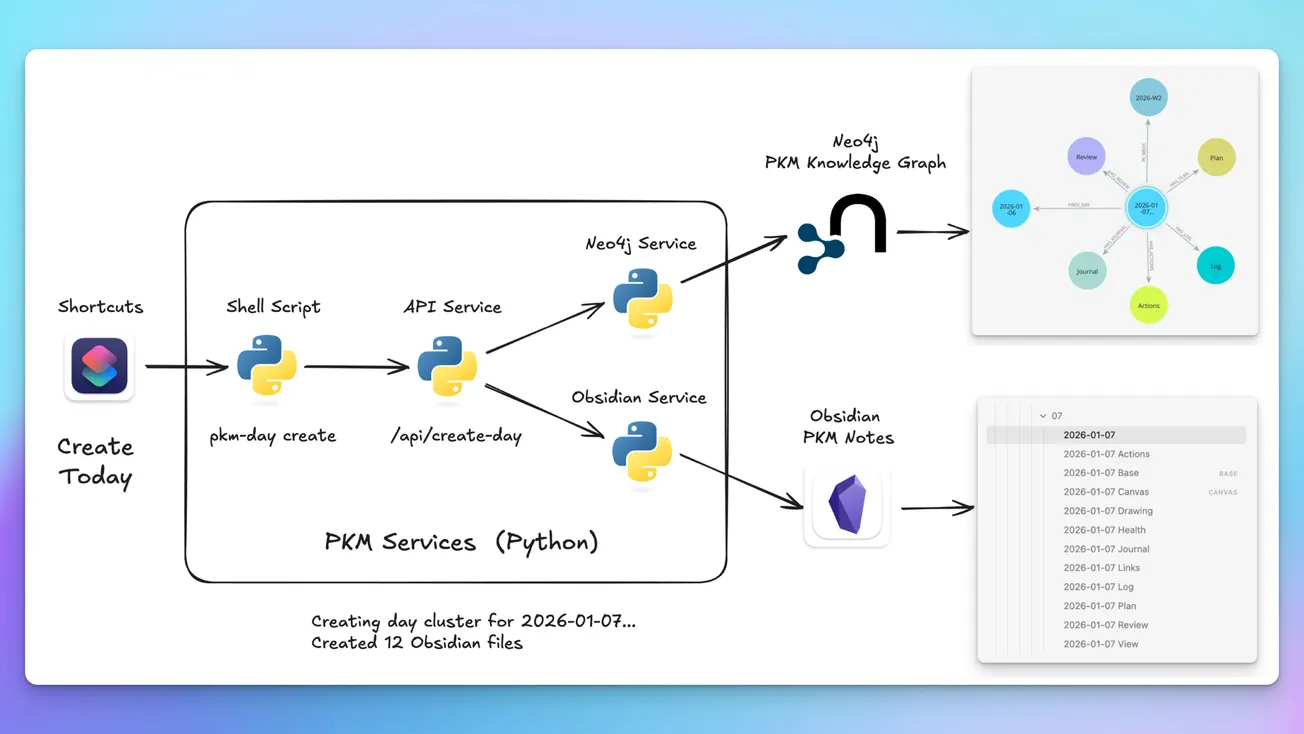
Python services integrate PKM knowledge system architecture using Neo4j, Obsidian, and Claude AI.
